
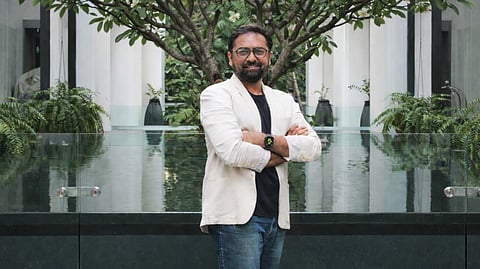
Jayakrishnan Sudhakaran on People-First Leadership and the Future of Hospitality
From his early days with Taj Hotels to leading Mövenpick Hotel Bangkok Sukhumvit 15 under the Accor umbrella, Jayakrishnan Sudhakaran has built a career rooted in empathy, presence, and quiet conviction.
In this conversation, he reflects on people-first leadership, the evolving traveller, and why genuine warmth still defines memorable hospitality.
What ultimately led you to helm Mövenpick Bangkok Sukhumvit 15?
I grew up moving across different cities, which shaped me early on. Experiencing different cultures, languages, and ways of life gave me a natural curiosity about people.
I learned to observe, to adapt, and to appreciate diversity. Looking back, that upbringing unknowingly prepared me for hospitality.
I began my career with Taj Hotels in India, where I was introduced to the discipline and grace of traditional hospitality.
Later on, I moved to various Indian and international hotel chains. Those years taught me that service is not just about process; it is about pride and care.
Over the last decade, I have been with Accor, working across different locations and brands.
Each role brought its own lessons about various stakeholders: teams, guests, and markets.
Eventually, I had the opportunity to lead Mövenpick Hotel Bangkok Sukhumvit 15, a property with heart and potential.
What drew me here was the chance to shape something meaningful with a strong team in a dynamic city like Bangkok.
What does a typical day look like for you as a GM?
No two days are the same.
My mornings usually begin with reviewing performance and connecting with department heads.
I spend time walking the hotel, meeting guests and team members. I believe a general manager should be visible not just in meetings, but on the floor.
Some days are about strategy and forecasting. Others are about solving immediate challenges.
What remains constant is staying connected to both numbers and people.
Titles aside, how would your team describe you as a leader?
I hope most would say I am approachable and fair.
I believe in being present. I am trying to listen more than I speak. It is still a work in progress. [Laughs.]
I try to create an environment where people feel safe to share ideas and take responsibility.
I am firm when needed, but respectful in my manner.
For me, leadership begins with people. If the team feels valued and supported, the guest experience naturally follows.
What, in your opinion, turns a stay from “pleasant” into “memorable”?
It is often the small things.
A pleasant stay means expectations were met. A memorable stay means someone felt seen.
When we remember a preference, when we respond with genuine warmth, when we make things feel effortless, that is when a guest connects emotionally.
Memorable experiences are rarely complicated.
They are thoughtful and sincere and easy to create.
Hospitality can be demanding. What continues to inspire you after all these years?
The human element.
Every day you meet someone new, maybe a guest with a story, a team member discovering their potential, or an owner looking towards growth.
There is always something to learn.
Seeing a team grow in confidence or watching a guest leave with a smile still gives me a sense of purpose.
That feeling does not fade.
Can you recall a guest interaction that reminded you why you chose this profession?
There have been moments when guests were going through difficult situations: illness, travel disruption, or personal stress.
Being able to support them, even in a small way, reminds me that hospitality goes beyond rooms and restaurants.
At times, you cannot follow a set protocol, and the human element with emotional intelligence needs to come into play.
Sometimes, simply listening and responding with empathy can change someone’s experience entirely.
Those moments stay with you.
What are today’s travellers looking for that perhaps they weren’t prioritising five or 10 years ago?
Guests today value authenticity more than ever.
They want seamless technology, but they also want a real connection.
They care about sustainability, transparency, and meaningful experiences.
They want efficiency, yet they still appreciate warmth.
The balance between innovation and humanity is becoming more important each year.
In an industry that never truly sleeps, how do you personally recharge? Outside of work, how do you unwind?
I find balance in simple things.
I enjoy painting in my free time. I am an amateur artist, and it allows me to slow down and observe details differently.
I love soft music, quiet nature walks, and exploring new restaurants.
Food, culture, and atmosphere always inspire me.
Spending time with family and stepping away from screens helps me reset.
Those moments keep me grounded.
I even find solace in watching a movie I would have watched when I was 10.
These are my most precious moments with the real me.
When you think about the future of travel and stay, what excites you the most?
The deeper connection it can create—not just between destinations, but between people and perspectives.
Travel is becoming more intentional.
Guests do not simply want to visit a city; they want to understand it.
They are seeking authenticity, meaning, and experiences that stay with them beyond the trip.
AI will play an important role in this evolution.
Used thoughtfully, it allows us to anticipate preferences, personalise journeys, and remove friction from the guest experience.
From curated recommendations to seamless check-ins, technology can make travel feel effortless.
But the finesse lies in balance.
AI should enhance human warmth, not replace it.
Data can guide us, but empathy, intuition, and genuine care are still what create emotional connection.
What excites me is the combination of intelligent systems working quietly in the background, giving our teams more space to focus on meaningful interaction.
When that happens, guests leave not just relaxed, but enriched—having discovered something new about a place, and perhaps about themselves.
If you could leave one lasting impression on every guest who stays at Mövenpick Bangkok Sukhumvit 15?
That they feel genuinely welcomed.
Bangkok can be energetic and fast-paced.
I would like our hotel to feel like a place of comfort and calm—a space where guests feel respected, cared for, and remembered.
What’s in the cards for you in the near future? Where would you steer your legacy toward?
I hope to continue growing, both personally and professionally, and in a way that feels purposeful, not rushed.
Hospitality has taught me that timing matters.
Growth should come with readiness and responsibility.
At some stage, I see myself taking on broader responsibilities, possibly overseeing multi-property operations where strategy, culture, and commercial performance intersect.
I enjoy aligning teams, strengthening fundamentals, and creating clarity between ownership expectations and operational execution.
That is an area I would like to deepen further.
At the same time, I remain focused on the present.
Leading Mövenpick Hotel Bangkok Sukhumvit 15 continues to be a meaningful chapter.
There is still room to refine, innovate, and elevate what we do here, particularly in how we balance guest experience with sustainable performance.
Ultimately, wherever the journey leads, my priorities will remain consistent: building strong, confident teams; fostering environments where people feel respected and heard; and ensuring that every decision strengthens both guest trust and long-term value.
If I can contribute to organisations in a way that leaves them stronger than when I arrived, that would be a legacy I would be proud of.