
- HOME
- TRENDING
- PEOPLE
- COMMUNITY
- LIFESTYLE
- OUR PUBLICATIONSOUR PUBLICATIONS
- MASALA RECOMMENDS
- MASALAWEDS
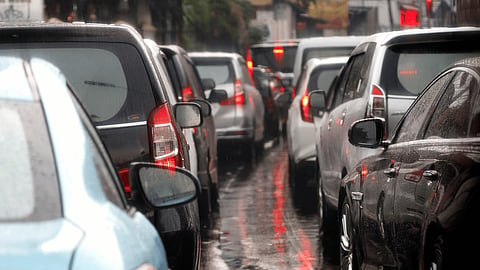
Let’s talk about congestion in Bangkok, and how it has its own hormone producing effect to reach an equilibrium. Take one soi that is increasingly difficult to access from front to back: Sukhumvit 12.
Key destinations along Sukhumvit 12 include a mix of hospitality and residential properties. The soi is home to several registered hotels, including, Sora Resort & Suites Sukhumvit, Galleria 12 Sukhumvit Bangkok by Compass Hospitality, and the recently opened Canopy by Hilton Bangkok Sukhumvit.
Residential developments include Circle Rein Sukhumvit 12, Prem Mansion, Lakeview Residences, Krishna Mansion, and Siriratana Mansion 1. In addition to these formal accommodations, the soi also contains numerous Airbnb stays and private houses.
With approximately 1,320 residential units currently operating in Sukhumvit 12, the soi supports an estimated daily population of around 5,000 residents. The area also welcomes roughly 400 long-stay guests and tourists per day, bringing the total daily population to approximately 5,400 people. This level of activity generates an estimated 1,000 vehicle movements into and out of the soi each day.
By 2029, planned developments in the pipeline are expected to add approximately 700 units to Sukhumvit 12's existing inventory. Meaning, the soi's daily population is projected to increase to around 6,000 residents and 1,500 stay-in guests, totalling approximately 7,500 people. Daily vehicle movements are estimated to rise to roughly 2,500 trips in and out of the soi.
While these figures are estimates, they have been derived from the soi's existing residential and hospitality inventory, with an effort to remain empirical rather than anecdotal.
Congestion creates two distinct effects on Sukhumvit Soi 12.
First, it creates frustration among residents. Unlike visitors, homeowners cannot simply avoid the area. This is where they live. With over 100 vehicle movements per hour on average, they often have no choice but to wait.
Second, congestion affects demand. While residents may tolerate delays, visitors and prospective occupants have alternatives. An average of 110 vehicle movements per hour can quickly concentrate during peak periods, particularly between 7–9 AM and 5–7 PM, pushing volumes beyond 220 vehicles per hour. What you end up with is gridlock, making the soi less attractive to those who can choose to go elsewhere.
I believe the short term stay guests may opt to stay in an area that is simply less busy, or contains multiple exit routes. One such example is Sukhumvit 24, where circulation and pressure are relieved with multiple entry ways and exits.
In the true nature of how humans behave, many will simply choose a more accessible location elsewhere. So, I believe allowing hotel inventory to exceed 1,000 rooms within a soi of roughly 2,000 dwellings risks creating traffic conditions that undermine both liveability and long-term demand.
The Environmental Impact Assessment (EIA) may wish to consider a ratio-based approach, capping hotel rooms as a percentage of residential dwellings. In a soi with only one effective entry and exit point, road capacity is the limiting factor. A ratio of one hotel room for every four dwellings may be a reasonable starting point for consideration
If you have suggestions about congestion in Bangkok, I would love to hear your point of view. Meanwhile, relax and enjoy the (very slow) ride.
