
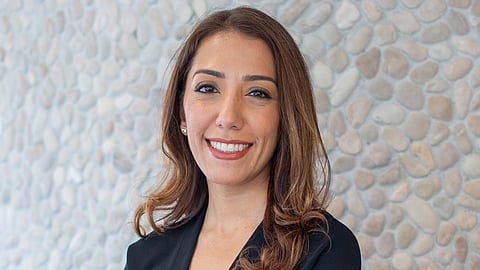
The Practice of Thought: Rasmeet Sachdej on Mindset and Resilience

Is the glass half empty or half full? While often reduced to a cliché, it continues to reflect something more telling: mindset. Subtle but perpetual, our mindsets shape how we interpret and engage with the world around us. Its influence often extends further than we tend to acknowledge.
To explore this, Masala spoke with Executive Mindset Coach Rasmeet Sachdej (@aspire_to_rise_) about her experiences, her outlook, and the work she does to help others reshape their perspective.
For those unfamiliar with the field, how would you define mindset coaching?
Mindset coaching focuses less on what you are doing and more on why you are doing it. Our mindset is the lens through which we experience life, shaping how we interpret challenges, relationships, opportunities, and even our own potential.
When that lens becomes clouded by limiting beliefs or past experiences, people begin to feel stuck or powerless. Rather than waiting for external circumstances to change, they learn to create meaningful change from within, bringing clarity, hope, and a renewed sense of control.
How does mindset coaching differ from therapy, and where do the two disciplines find common ground?
Coaching and therapy both support personal growth, but they often serve people at different stages of their journey. Therapy is especially valuable for individuals facing deeper psychological challenges or mental health concerns that impact daily functioning.
Therapists are trained to diagnose and treat these conditions and often work with clients over longer periods to support healing. Mindset coaching, on the other hand, is more future-focused.
While we may explore the past to understand patterns, the focus is on moving forward. Where the two fields meet is in their shared commitment to the client’s wellbeing, both create a confidential, non-judgmental space for honest reflection, ultimately empowering people with greater self-awareness and a stronger sense of control.
How might someone recognise that mindset coaching could be beneficial for them?
People typically reach out to me during two kinds of moments. First, when an external challenge becomes overwhelming and they don’t know how to move forward.
Second, when life may look fine on the outside, yet internally something feels off balance, and they sense they are seeking more clarity, fulfilment, or peace. Sometimes life is already good, but someone wants it to feel more aligned with who they truly are.
You previously worked in different fields. What prompted the pivot toward mindset coaching, and what did that transition teach you about yourself?
Before becoming a mindset coach, I explored several career paths across marketing, sales, and real estate. Each role deepened my understanding of people, communication, and how I navigate challenges.
After becoming a mother, I began transitioning into entrepreneurship, and over time, I noticed my conversations naturally shifting toward personal growth, purpose, and the power of the mind.
Those moments sparked something in me. As I shared more of my own experiences, people told me it gave them hope and helped them see their challenges differently, which led me to pursue formal training in mindset and coaching, including certifications through programmes led by Jack Canfield and advanced coursework with The Life Coach School.
What the transition taught me most is the power of listening. I realised that during difficult moments, people don’t always need advice, they need someone who can sit with them, understand them, and remind them they’re not alone. That insight became the foundation of my work.

Having lived internationally, in places such as Guam, and working with international clients, have you noticed cultural differences in the way people approach personal growth and life challenges?
Having lived in countries such as Japan, Thailand, Australia, and Guam, and working with a diverse international client base from regions including Dubai, Canada, Mongolia, Malaysia, the United States, Guam, Bangladesh, Thailand, and parts of South America, I’ve noticed something quite profound: despite cultural differences, human experiences are far more similar than we think.
Across cultures, people navigate challenges, relationships, and the search for meaning in very similar ways. What varies more is access to resources and how openly personal growth is discussed.
In some places, seeking support has historically carried stigma, but that is changing rapidly. With the rise of digital platforms and global conversations around mental wellbeing, people are becoming more open to exploring the role their mindset plays in their happiness and resilience.
That shift, to me, is incredibly encouraging.
From your perspective, what mindset patterns do you often observe within the Thai-Indian community when it comes to life, ambition, and expectations?
Historically, many individuals within the Thai-Indian community grew up with strong expectations around success, reputation, and responsibility. In some cases, this created a mindset shaped by fear of judgment or pressure to follow a predetermined path, the idea of “What will people say?” carried significant weight.
However, we are now witnessing a meaningful shift. Many from older generations followed these expectations, often sacrificing their own desires, are now the change makers, opening the door for younger generations to question those patterns.
Today, I see more people embracing growth, speaking openly about failure, and recognising that perfection is not the goal. Our definition of what is “normal” is expanding, which is a powerful change.
While there is still room for greater compassion around people’s struggles, I believe that as more individuals do the inner work, the community as a whole will continue to evolve, and that gives me a great sense of hope.
Alongside the role of a mindset coach, you are also a mother. How has motherhood shaped your work?
Motherhood has transformed me in ways I could never have imagined. If I am honest, I often wish I had access to these tools when I first became a mother.
Being both a coach and a mother constantly reminds me that personal growth begins with ourselves. When we work on our own emotional awareness, patience, and self-regulation, it naturally changes the environment within our families.
I apply the tools I teach others to my own family, and it has transformed us. Motherhood has also deepened my compassion for my clients.
It is easy to have opinions about parenting until you actually become a parent yourself. Every mother is doing her best with the tools, responsibilities, and emotional demands she is carrying.
Understanding that has allowed me to approach my clients and myself with far more empathy and grace.
You host many workshops. How does the energy of guiding a room full of people differ from working one-on-one with clients?
Both group sessions and one-on-one coaching offer something distinct. Facilitating a room full of people requires a different kind of energy.
In a group setting, individuals arrive with different backgrounds, personalities, and emotional states, so part of my role is to read the room and create an environment where people feel safe enough to participate and share.
I often begin by being vulnerable myself, when people see that honesty, it gives them permission to open up, allowing a room of strangers to connect and learn from one another.
In contrast, one-on-one coaching offers a private and confidential space, allowing for a more candid and personal exchange. Confidentiality is of the utmost importance in these sessions, creating a safe space for clients to be completely honest and explore their thoughts without judgment.
It also helps that many clients have already engaged with my work on Instagram and LinkedIn, often telling me they’ve been quietly following my content for some time.
Seeing my consistency over time, creates an initial sense of trust, allowing us to move into deeper conversations with greater ease.
Without sharing confidential details, can you describe transformations you have witnessed in your clients that deeply moved you?
Many people come to me feeling like they have lost control of their lives. On the outside, everything may look fine, but internally they feel overwhelmed or disconnected from themselves.
One of the biggest shifts clients notice is an increased level of self-awareness and the ability to self-regulate. They begin to respond more intentionally rather than react to external circumstances.
I’ve seen this powerfully with leaders who initially believe the challenges lie within their teams or business. Through coaching, they begin to recognise the ways they may be getting in their own way, through their patterns, communication, or reactions.
As they start working on themselves, the shift is reflected in their leadership, and in turn, the culture and performance of their company begins to change.
Those moments are incredibly powerful, because people realise they already have the capacity within them to create meaningful transformation, without needing the external world to change.
For readers who feel drawn to this work, what does working with you typically look like?
Most of my work is done through private one-on-one coaching, where we explore a client’s thought patterns, emotional responses, and life experiences in depth.
These sessions create a safe space for reflection, allowing clients to ask questions they may never have considered before, helping them gain clarity and shift patterns that may have been present for years.
I also host workshops where concepts are explored in an accessible way, allowing individuals to experience my approach and reflect in a group setting.
I have also expanded my work with companies through corporate training, supporting teams in developing stronger communication, emotional awareness, resilience, and emotional regulation, especially during stressful times.
I also coach leaders and executives privately, helping them navigate challenges and perform at their best, both professionally and personally.
I find that those who benefit most from this work are individuals who are ready to look inward and take responsibility for their growth.
Finally, if you could leave our readers with one sentence to carry into their lives, what would it be?
Anything is possible when you are willing to do the inner work and truly believe in your own potential.