
- HOME
- TRENDING
- PEOPLE
- COMMUNITY
- LIFESTYLE
- OUR PUBLICATIONSOUR PUBLICATIONS
- MASALA RECOMMENDS
- MASALAWEDS

Suits have held their ground for centuries, ever since King Charles II introduced the three-piece ensemble as a cleaner, more disciplined alternative to French court dress. Fashion cycles move quickly, yet the suit endures as a marker of taste, structure, and authority.
Few garments have managed to evolve with culture while remaining a constant in boardrooms, ceremonies, and daily life.
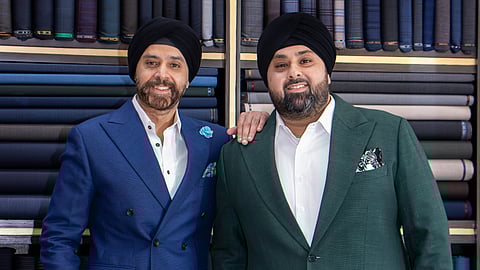
That same sense of longevity comes through in the story of the Gulati family. Sandeep (Sam) Gulati and Karan (Ken) Gulati, the two brothers behind Gulati Bespoke Tailoring, trace their roots to the mid-1950s.
Their grandfather, Iqbal Singh Gulati, moved from India to Ubon Ratchathani and founded Rajawongse Textile Trading. The business supplied fabric nationwide and served the nearby U.S. Air Force base, growing rapidly through the Vietnam War years and expanding into custom tailoring.
After the war, the family relocated to Bangkok and divided the business. Their father, Jasbir Singh Gulati, established Gulati Bespoke Tailoring, which still operates in its original location today.
With that heritage framing their present vision, the conversation begins.

As the third generation behind Gulati Bespoke Tailoring, how would you describe the brand’s 50-year legacy and the values that have carried it forward?
Karan: We often say that Gulati isn’t just a shop; it’s a timeline. Our grandfather and father gave us the craft. My brother gave us the reputation. Now, we’re both entrusted to build on it to continue the legacy forward.
Sandeep: From the early days, when I started working with our dad, the one thing he’s always repeated was how we must work with integrity and ensure the customer is always happy. I sincerely believe that is what has brought us to where we are today.
From the beginning up until today, our non-negotiables have been meticulous work, quality control, honest advice, and giving our clients the best value possible without cutting any corners. I would say 90 percent of our clientele are now repeat clients, or have been recommended through word of mouth.
They don’t just walk in. We’ve truly grown a business where we’re friends with our clients. We’ve built a sense of trust where they send their family, friends, and colleagues to us because they know the quality and level of care will be the same or even better each time.
That trust is the real legacy and is something we cherish deeply.
Bangkok is famous for entire streets lined with tailors. In a city where quality can vary dramatically, what sets Gulati Bespoke Tailoring apart, and how do you maintain credibility and trust?
Sandeep: Indeed, Bangkok is full of tailors! Though only a handful have had the same family name above the door, and have been at the same location for over 50 years. Most importantly, each client who walks through our door knows that they’ll be dealing with a member of our family, and not a rotating cast of salesmen.
Karan: Also, what I think sets us apart is our passion for the business. More than just doing it as a job, my brother and I care deeply about good clothing and keeping up with fashion trends, as well as knowledge about sartorial classics.
We take our time with each consultation and try to understand the needs of each client before we advise them on what to buy and how it will be of use to them.
We’re fortunate to have a deep network of suppliers and vendors, both locally and internationally, who give us access to the best fabrics. This allows us to stay up to date on the latest fabric collections and style trends, so we can offer unique pieces to our discerning clientele.
Sandeep: In short, we don’t sell the idea of a “quick suit” or offer a “24-hour service.” We offer a relationship and a standard that we’re prepared to put our family’s label on.
What roles do each of you hold within the company, and how do your age differences bring distinct strengths to the brand?
Sandeep: Within the business, we each have our own set of responsibilities and strengths. Our father is the anchor of the house. He’s the master fitter who’s trained many of the tailors working with us today.
At 72, his eye for the drape and fit of a garment is simply unmatched. He has an instinctive understanding of posture, balance, and proportion that you can only get from decades of experience.
My area is to oversee the overall strategy of the business: from curating the guest experience to fabric selection and final product delivery. With over 30 years of experience in the business, I deeply value the personal relationships that we have built.
I’ve spent a lot of time nurturing our client relationships. This begins from their time spent in our store to ensuring that sales services are delivered promptly. Most importantly, I’m the main bridge between my younger brother and my dad. It’s a position that I deem both challenging and fortunate to be in at the same time.
Karan: It’s not easy working with, basically, two dads in the business! [Laughs] My brother and I have an age gap of almost 14 years, so our dynamic is fun and, at times, serious.
However, I am always grateful to have both of them around and guiding me. My main role in the business is enhancing our digital footprint—converting our paper records into a digital database, working on our recently launched online atelier, building our social media presence, and so forth.
My job has really been ushering the business into the new age, making it more streamlined for our clients and us going forward. Aside from that, I also do a lot of business development and close collaboration projects for the business.
It helps that I’m a sociable person, so I try to leverage my network to grow the business and put our family name out there.
How would you define your family’s working dynamic today, and how has it evolved since your father’s era at the helm?
Sandeep: Our dad’s still actively involved in the business, and we’re fortunate to have him as our mentor. When I joined the business with him, we did everything by pen and memory.
All client preferences were either jotted down in an order book or memorised. Today, all this data has been digitised, so that our whole team can uphold the same standard.
Measurements, fit profiles, client posture photos, and fitting notes have been systemised, creating a smooth and efficient experience for our team and our clients, whether they visit us in person or place their orders from abroad through our website.
Karan: Dad still signs off on the key fittings and gives his approval once he is satisfied with the result, but our role is to design everything that leads up to that moment—from appointment bookings and consultations to payment flows and a content strategy that reflects what truly happens in store.
We’re trying to make the process for our team and us as efficient as it can be. So, the dynamic has shifted from “one man running everything” to “a family-led atelier” supported by a more systemised and tech-enabled framework.
The culture, however, is the same: we argue about lapel widths, not about values!
Fashion cycles move at lightning speed today. How do you keep pace while staying true to the character of Gulati Bespoke Tailoring?
Sandeep: Our job isn’t to chase every trend; it’s to translate the right ones into something that’ll still look good in 10 years’ time.
We stay current by constantly updating our fabric library with seasonal collections from suppliers and mills that we work with, and by looking at what our clients are gravitating towards in terms of fit, lapel shapes, and styling.
On the other hand, we do have a few non-negotiables, including clean lines, balanced proportions, proper canvassing, and a fit that works with the posture rather than against it.
Karan: On our social media and website blog, we discuss lapels, material weight, construction, and silhouettes, so our clients understand that today’s slightly wider lapel or fuller leg isn’t a gimmick, but part of a larger style story.
That education allows us to evolve with fashion while staying recognisably Gulati.
Indian menswear is surprisingly difficult to find in Thailand. Have you considered expanding into this category?
Sandeep: As an Indian family, ceremonial and traditional Indian menswear has always been part of our world.
Over the years, we’ve created bandhgalas, Nehru jackets, bundis, and other Indo-Western wedding looks for clients and friends who couldn’t find them off the rack in Thailand.
What we haven’t done, at least not yet, is launch a full, heavily marketed Indian menswear line. When we do something, we want to do it properly—respectful of tradition and impeccable in cut.
Karan: The key challenge we face is finding skilled artisans who can replicate the level of embroidery and handwork that’s available in India.
However, that’s also allowed us to be more creative. So yes, it’s very much on our radar, and we’re already working on capsule ideas that merge classic Indian silhouettes with our bespoke tailoring approach.
Many tailoring houses rely on travel to secure business, yet Gulati Bespoke Tailoring has remained a household name for both locals and visitors. What keeps clients returning?
Sandeep:We’ve built our reputation from a single flagship address offering a premium bespoke experience and service.
What keeps our clients returning is a combination of continuity, memory, and care. They see the same faces: my father, myself, Ken, and the core team who’ve been refining their fits over multiple visits.
Once we’ve perfected a client’s silhouette, we store detailed fit profiles and measurements, so reordering becomes effortless—whether they walk through the door or commission a new suit from overseas.
If their body or lifestyle changes, we evolve the pattern with them, instead of starting from scratch.
But the real reason they return is the relationship built. We insist on honest advice, thoughtful aftercare, realistic timelines, and clear communication.
We treat clients the way a family business should: personally, consistently, and with genuine pride in their milestones.
For many, a visit to Gulati has become part of their Bangkok tradition. Clients don’t just return to update their wardrobe; they return to reconnect with the people who’ve been tailoring not just their clothing, but have been a part of milestones that define their lives.
Karan: Our business has always been built on relationships rather than routes.
My father and brother have done a fantastic job in fostering and maintaining relationships over the decades in the business. Most clients that visit us eventually become friends, and some become family. It’s our way of doing business.
The trust and loyalty that we’re able to build is what I believe keeps bringing people back.
The tailoring landscape in Thailand has shifted in recent years. How does the business environment differ from the period when many Thai Indians traditionally dominated this craft?
Sandeep: When our father started, the Thai-Indian tailoring community was tight-knit and relatively small.
Many families, ours included, built their reputations quietly over decades, dressing businessmen, diplomats, expats, and local professionals.
Today, the market is much more fragmented. You have aggressive “24-hour suit” shops, online-only made-to-measure brands, and a new wave of Thai and international tailors all competing for the same eyeballs.
Karan: These days, clients are also far more informed.
They arrive with screenshots, knowledge of fabric mills, and opinions on canvassing versus fusing. We believe that’s a positive shift, but it means you can’t hide behind a low price and a pretty shopfront.
As a long-established house that has survived this shift, we’ve done so by doubling down on authenticity, transparency, and long-term relationships rather than racing to the bottom.
We’ve learnt that volume is not always key, but quality is of utmost importance. For us specifically, it’s meant embracing technology and content while preserving the soul of a generational family atelier.
Your lively social media presence has become something of a signature. What inspired this approach, and how do you plan and manage your content?
Karan: We took the leap into social media during COVID-19 as a means of staying in touch with our clients and friends around the world when they weren’t able to visit us in person.
It gave us a base to market special promotions, as well as provide a platform to keep our clients and us connected.
The interest took us by surprise, so we transitioned to devoting our resources to creating educational, meaningful, and relatable content.
It’s a joint effort between all of us, along with our social media managers, to build a community that relates to our content, work, and, most importantly, our passion for the business.
It’s something we’re very proud of and has been a game-changer for us.
Sandeep: Our Instagram and other social platforms are essentially a digital extension of our atelier and fitting room.
Over time, and with lots of hard work, our following has grown to almost 200,000 people who are interested in the “why,” “how,” and “what” of our business.
We showcase real fittings, real clients, and real garments. That helps build trust long before someone walks through our doors.
Karan: Many of our clients and friends live abroad, so our content helps keep them in the loop and keeps us in their feeds.
It allows, at times, for impulse buys and for clients to share certain pieces they like with their network.
Social media helps us break down what we do daily into short visual stories that help people think of us whenever they think of purchasing a bespoke suit.
The rule is simple: if it doesn’t reflect our standard and what we actually do, we don’t post it.
Beyond tailoring, are there any other industries or business ventures you are involved in or would like to be in for the near future?
Sandeep: Hospitality is in our blood. It’s a natural extension of us and our business, so we’ve maintained a keen interest in the hotel sector over the years.
We’ve partnered with a couple of hotels and built one of our own in the bustling Phrom Phong area.
Real estate is another sector we actively invest in and keep a keen eye on. Having done some deals over the years, we now focus on a long-term buy-and-hold strategy in most investments.
Karan: Everyone who knows me knows that I have a deep passion for F&B.
It’s something that I would love to pursue in the near future, and it’s a sector that I’m actively seeking opportunities in.
I started Bubsburger with my wife during COVID, and hopefully, 2026 will be the year we make a comeback, along with some other exciting F&B ventures that we’re currently studying.