
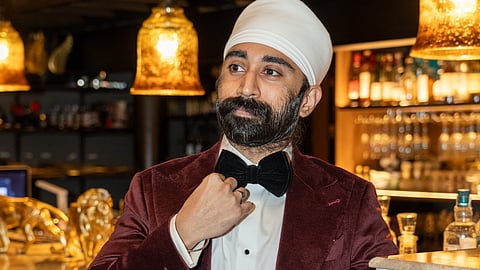
Built on Legacy: Saran Sachanarula on Tailoring and Intention
How do you feel about sustainability and conscious consumption in fashion?
On most days, you’ll find Saran Sachanarula in a fitting room in Bangkok.
Picture this: jacket halfway on a client’s shoulders, measuring tape looped around his neck, phone buzzing somewhere between messages and mood boards. It’s not the career he once imagined for himself, but it’s the one that quietly found him.
Some careers are carefully planned. Others are tailored by fate.
For Saran, better known online as Sartorial Santa (@sartorialsanta on Instagram), bespoke tailoring was never part of the original dream. He once envisioned a future in sales, until the pandemic rerouted his path straight into his family’s craft.
What began as circumstance soon became a calling.
Over the last four years, style transformed from something he admired from afar to something he embodied daily. The shift was personal as much as it was professional, sparked in part by the quiet confidence he found through his wife.
With her encouragement, his wardrobe softened into something more intentional, more expressive.
Today, as the face of Roberto Su Misura, Saran brings old-world tailoring into a modern, client-first context, where heritage meets personal style. From learning the language of accessories to building a sartorial identity rooted in legacy, his journey is less about reinvention and more about finally owning what was always his.
That evolution became most visible in the details.
A few months ago, Saran’s relationship with accessories shifted from afterthought to intention, sparked by a single bracelet gifted by his father. What began as one meaningful piece soon expanded into a language of rings and necklaces, each adding a new layer to how he expresses himself.
For someone raised on the discipline of tailoring, this move toward personal adornment felt like a quiet rebellion—a modern one. Proof that style lives as much in the small choices as in the silhouette of a suit. (Also, proof that even tailors have a “just one more accessory” phase.)
“Clothing doesn’t define who you are. But it can reinforce how you carry yourself. When you dress in alignment with your identity, it creates clarity and confidence. It’s less about impressing others and more about feeling grounded in yourself.”
It’s a philosophy that runs through every fitting, every consultation, and every piece of content Saran creates as Sartorial Santa.
In an age of micro-trends, fast fashion, and outfits built for the algorithm, Saran’s approach feels refreshingly personal—rooted in craft, shaped by relationships, and grounded in the belief that good style isn’t about performance, but presence.
Whether he’s guiding a client through their first bespoke suit or explaining the difference between form and function online, his north star remains the same: clothes should serve the person wearing them, not the other way around.
What does “good style” mean to you?
Good style is authenticity with intention. It’s when clothing aligns with who you are, your lifestyle, and your values without trying too hard. When something feels effortless yet considered, that’s good style.
How would you describe your personal style?
Refined, intentional, and understated. I gravitate toward classic silhouettes with subtle contemporary touches—clean tailoring, strong shoulders, relaxed trousers, and timeless colour palettes. My style is less about trends and more about proportion, fit, and longevity.

How does your cultural background and lifestyle influence the way you dress, if at all?
My Sikh background instilled a strong sense of dignity and self-respect, which directly influences how I dress. There’s an emphasis on neatness, structure, and presence.
Living in Bangkok also plays a role. I balance classic tailoring with lighter fabrics, breathable construction, and relaxed styling to suit the climate and lifestyle. It’s a blend of heritage, discipline, and modern practicality.
How has your relationship with fashion changed over time?
Earlier, fashion felt expressive and experimental. Over time, especially as I grew into my role as a tailor and business owner, it became more intentional.
Today, I value restraint over excess and craftsmanship over branding. My relationship with fashion matured from “how it looks” to “how it’s made and how it serves the wearer.”
How do you feel about sustainability and conscious consumption in fashion?
I strongly believe in buying less but better. Bespoke and well-made garments are inherently more sustainable because they’re designed to last, to be repaired, and to be worn for years.
Conscious consumption isn’t about perfection. It’s about responsibility and intention.
What’s one fashion rule you love breaking?
That tailoring has to be stiff or formal. I enjoy wearing tailored pieces in relaxed, everyday contexts. For example, pairing a structured jacket with casual trousers or wearing tailored pants with knitwear.
Elegance doesn’t need to feel rigid.
What’s one item in your wardrobe you reach for again and again?
A well-cut pair of tailored trousers in a neutral tone. They’re versatile, timeless, and work across multiple settings, from formal meetings to casual evenings.
What’s the most unexpected item in your wardrobe?
Running shoes and athletic wear. Given my tailoring background, people are often surprised that I’m equally committed to fitness.
But movement, discipline, and balance are just as important as appearance.
What advice would you give someone trying to find their personal style?
Start with fit and comfort before trends. Observe what you naturally reach for, what makes you feel confident without effort.
Build slowly, invest in fewer but better pieces, and allow your style to evolve naturally. Personal style isn’t created; it’s refined over time.
A refined off-duty look with Massimo Dutti knitwear, tailored by Roberto Su Misura, and grounded with suede Belgian loafers by MARS PEOPLES.