
- HOME
- TRENDING
- PEOPLE
- COMMUNITY
- LIFESTYLE
- OUR PUBLICATIONSOUR PUBLICATIONS
- MASALA RECOMMENDS
- MASALAWEDS

Shilajit is not new. It has been used for centuries in Ayurvedic, Tibetan, and Unani practices, and in many Indian homes, it is simply part of the routine. It sits in the cupboard and is used when needed.
Now, it is everywhere. It has become part of a wider push around supplements and self-improvement, often framed as something you need to feel better, perform better, or keep up.
You have probably seen the type. Biohackers talking about energy, testosterone, focus, all of it. The superfood has been picked up quickly and marketed even faster.
Still, that version is only part of the story. Before it became a trend, it already had its place.
So here, Masala breaks it down in a straightforward way; what it is, where it comes from, and whether it is actually worth your attention.
In Ayurvedic tradition, shilajit is most well known in rasayana practice, a sector within Ayurveda that centres around promoting longevity.
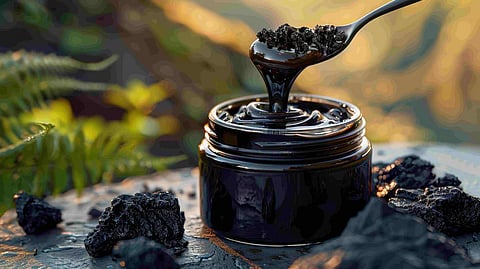
The ancient substance is a dark, sticky sap with roots tracing back nearly 5,000 years to the Himalayas. Folklore states that locals noticed monkeys eating the substance as it seeped from the rocks, drawn to it with unusual energy. Curious, they tried it themselves and reported a similar sense of vitality.
Today, it is no longer limited to the Himalayas, harvested from mountain ranges across regions, with demand steadily rising.
At its core, shilajit is a plant-based exudate, formed over time from the slow decomposition of plant matter and organic material pressed into the mountains.
Thick and tar-like, it carries the weight of its environment. Its name comes from Sanskrit, often translated as “conqueror of the rock”—a direct nod to where it is found.
Shilajit has been labelled a superfood, and not without reason. It is perhaps best known for its anti-ageing properties, which explains its recent adoption by the biohacking crowd online.
Rich in antioxidants, the tar-like substance helps reduce oxidative stress, something often linked to premature ageing and slower muscle recovery.
It is also high in fulvic acid, a naturally occurring compound packed with antioxidants, electrolytes, and anti-inflammatory properties, known to support nutrient absorption, skin health, and overall energy levels.
Beyond that, shilajit has been associated with improved cognitive function and memory. Fulvic acid may help reduce inflammation in the brain and limit the build-up of tau proteins, which are linked to conditions such as Alzheimer’s disease.
It is often credited with improving alertness, easing brain fog, and reducing fatigue, contributing to sharper mental focus.
As an adaptogen, it may also help regulate stress and lower cortisol levels, offering some protection against the cognitive strain that comes with chronic stress.
There are also links to dopamine balance, which plays a role in motivation, focus, and reward.
Outside of ageing and cognition, shilajit is frequently discussed in relation to male health. It has been linked to increased testosterone levels by supporting the function of Leydig cells, which are responsible for hormone production.
It is also commonly used as a supplement to support male fertility.
Like any supplement, it is worth speaking to a doctor before adding shilajit into your routine, particularly if you have any pre-existing health conditions.
Natural does not always mean risk-free, so sourcing matters. Look for purified, lab-tested products from reputable brands to avoid contamination from heavy metals or other impurities.
As for dosage, most health providers suggest around 100 to 500 mg per day. For an amount best suited to you, check in with your GP.
As for consumption, shilajit is typically taken in a sticky resin or powder form, and can be mixed into drinks like juices, or stirred with condiments such as honey or nut butters to mask its naturally bitter taste.
It is best to avoid taking shilajit with hot liquids, as heat can affect its potency, as well as alcohol and caffeinated drinks, which may interfere with mineral absorption (less noticeable benefits).
For best results, it is often taken on an empty stomach in the morning. If you find yourself feeling restless, take it in the evening with warm milk for deep sleep and improved muscle recovery.

Their resin blends shilajit with their signature ConcenTrace® Trace Mineral Complex, a mix of minerals sourced from Utah’s Great Salt Lake, designed to deliver a full spectrum of ionic trace minerals.
The range is also offered in several forms, from honey sticks and gummies to capsules, powder, and traditional resin, making it easy to work into different routines.
Available on iHerb, Shopee, and on their website, traceminerals.com.
This near-century-old brand, long considered a staple in many households, is built on a “head-to-heel” approach to wellness.
Its shilajit is offered in capsule form, purified using the traditional Agnitapi method, with both a standard option and a Gold version that blends shilajit with Swarna Bhasma and a selection of herbs.
Their formulations are lab-tested and remain one of the most widely used capsule formats across India.
Available on Shopee, via their website (himalayawellness.in), and across retail stores in India.
With over 130 years behind it, this fifth-generation ghee-making family business leans into both natural foods and Ayurvedic tradition.
A member of the National Ayurvedic Medical Association in the United States, the brand keeps its shilajit simple.
The resin is made from purified Himalayan shilajit, without frills.
Alongside it, there are liquid drops and gummies, flavoured with citrus and ginger, for those who prefer something easier to take.
Available through iHerb and through their website, pureindianfoods.com.